DR Congo Are Capable of Causing a Huge Upset Against England and Here’s Why
 England will enter their World Cup last-32 clash with DR Congo as favourites, but Thomas Tuchel’s side have been warned they could face one of the most awkward opponents remaining in the tournament.
The Leopards have reached the knockout stages of the World Cup for the first time in their history and have already shown they are capable of frustrating some of the competition’s biggest nations.
Sebastien Desabre’s side earned a valuable point against pre-tournament contenders Portugal, producing a disciplined defensive performance that limited Cristiano Ronaldo and company to just one shot on target – Joao Neves’ sixth-minute goal.
Captain Chancel Mbemba and Burnley defender Axel Tuanzebe played key roles in keeping Ronaldo quiet, while Newcastle United’s Yoane Wissa’s headed equaliser capped an impressive display from DR Congo, who many felt were unfortunate not to take all three points.
Their next test against Colombia highlighted a different side of their character. Although they eventually fell to late pressure, goalkeeper Lionel Mpasi produced a superb performance to keep Colombia’s attacking players at bay and underline the Leopards’ ability to compete against elite opposition.
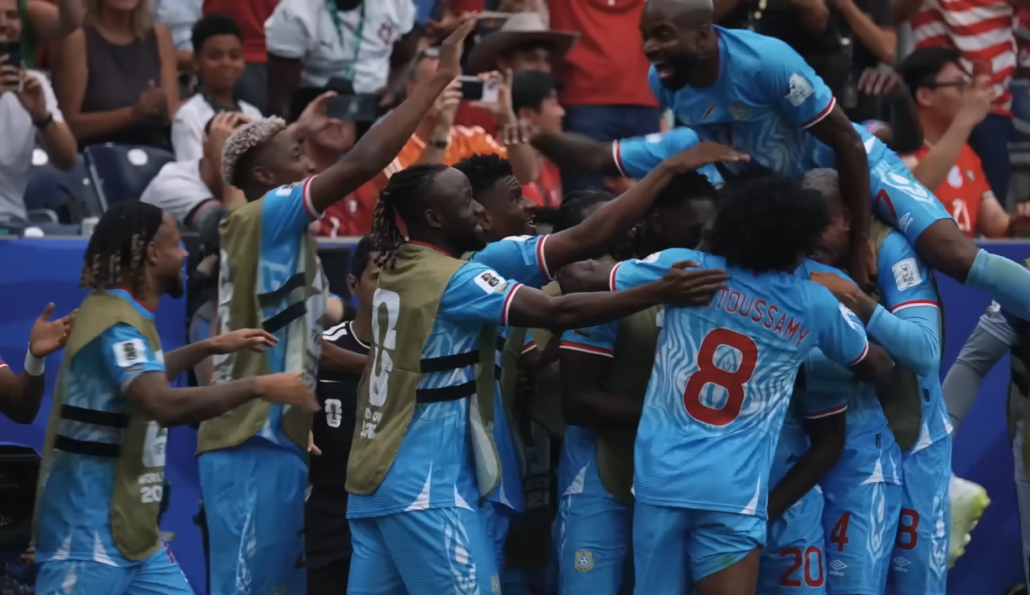
Their historic victory over Uzbekistan secured DR Congo’s place in the round of 32 and set up a meeting with England that represents a huge moment for a nation still searching for its first big moment on the world’s biggest stage.
A defensive approach built to frustrate
DR Congo’s success under Desabre has been built on organisation, patience and resilience.
The Leopards are not a team that rely on dominating possession or playing open football. Instead, they are comfortable defending deep, allowing opponents to control the ball before looking to exploit opportunities on the counter.
Since Desabre took charge, DR Congo have never lost a match by more than one goal – a record that highlights how difficult they are to break down.
That defensive structure was clear during the group stage, with Desabre often using a back five, three central midfielders and two forwards. Wing-backs Aaron Wan-Bissaka and Arthur Masuaku provide width, but their priority has been defensive discipline rather than constant attacking runs.
DR Congo are comfortable allowing opponents to have possession and forcing them to find a way through a compact defensive shape.
That could be a concern for England, who have faced criticism for their attacking creativity despite their 2-0 victory over Panama.
Tuchel’s side have struggled at times to find consistent penetration against teams that sit deep, and DR Congo’s style could provide another difficult challenge.
Ghana’s approach against England offered a warning, with the Three Lions struggling to create clear opportunities and allowing their opponents chances on the counter.
DR Congo are likely to follow a similar blueprint, but unlike some defensive sides, they also carry a significant attacking threat.
Wissa leading Congo’s attacking threat
Yoane Wissa has emerged as one of the tournament’s standout forwards, scoring three goals so far – matching England captain Harry Kane’s tally and surpassing Cristiano Ronaldo’s return.
The Newcastle forward, who missed the Africa Cup of Nations after prioritising his club commitments, has rewarded Desabre’s faith with a strong World Cup campaign.
Wissa scored in the opening match before adding two more goals against Uzbekistan, becoming one of the most dangerous attacking players in the competition.
Alongside him, Desabre has often selected Real Betis striker Cedric Bakambu, although he is still searching for his first impact at the tournament.
DR Congo also showed their ability to adapt against Uzbekistan, with Fiston Mayele introduced to provide a different attacking option.
Mayele, who plays for Pyramids, was recently named the men’s Interclub African Player of the Year and brought a greater sense of composure in front of goal.
Desabre’s tactical flexibility was questioned before the Uzbekistan match, but a switch to a back four and the inclusion of Nathan Mbuku and Brian Cipenga helped change the game.
Both players impressed and showed they can offer a different threat either from the start or as substitutes.
A meeting shaped by shared connections
Although England and DR Congo have never faced each other in a competitive match, the fixture carries plenty of links between the two nations.
Several DR Congo players have connections to English football, including Tuanzebe, who was born in Bunia before moving to England as a child.
The defender came through Manchester United’s academy, captained the club on one occasion and represented England at youth level.
Wan-Bissaka was born in London and also played for Manchester United, while previously earning an England senior call-up in 2019.
Masuaku will also be familiar to English supporters after his spells with West Ham United and Sunderland, while Noah Sadiki has become one of DR Congo’s highly rated young players.
There is also a connection within England’s squad, with Ezri Konsa eligible to represent DR Congo through his heritage.
For the Leopards, the match represents another chapter in a historic tournament. Their qualification marks their first World Cup knockout appearance and continues a remarkable rise after a 52-year wait since their last appearance at the competition as Zaire in 1974.
DR Congo became the first sub-Saharan African nation to qualify for the World Cup that year, and now a new generation has the chance to create another landmark moment.
England may be the favourites, but DR Congo have already shown they are capable of making life uncomfortable for the world’s best. For Tuchel and his players, the Leopards are unlikely to be a straightforward obstacle.
- Display 12 Products per page