From Paris to Wimbledon: Britain’s last man standing – Arthur Fery’s Journey to Centre Court
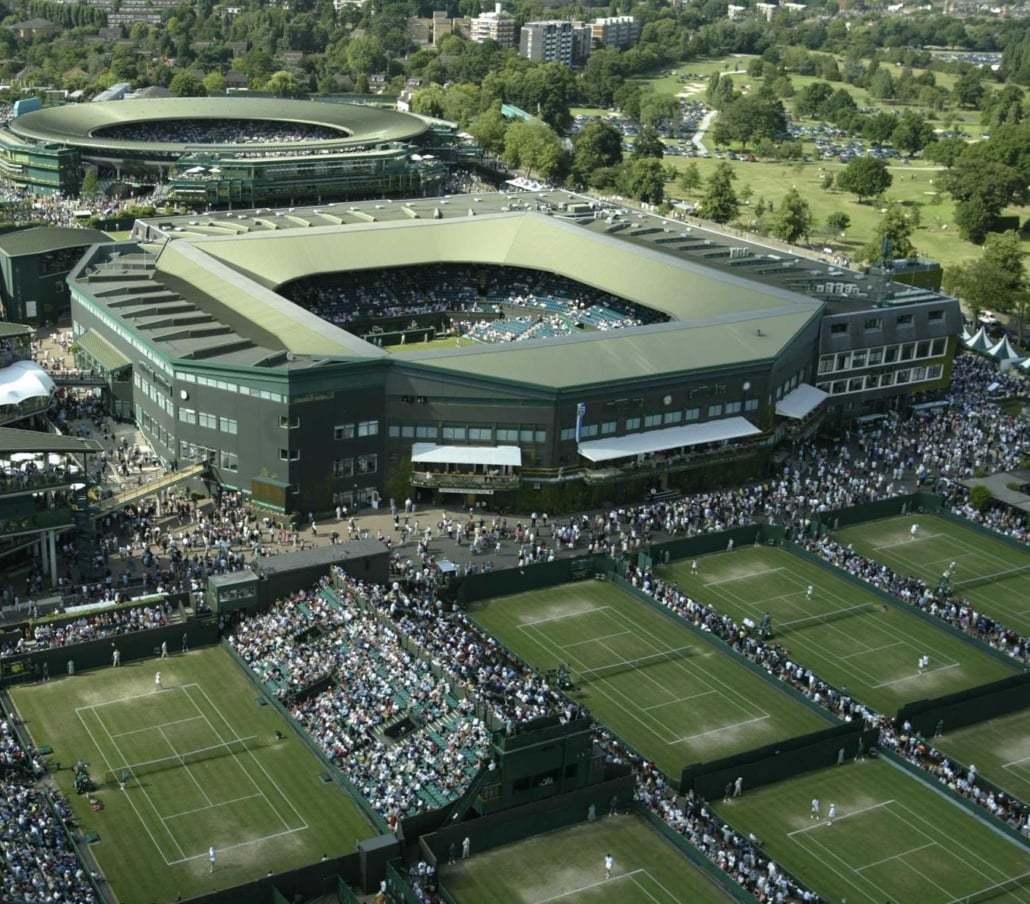 Arthur Fery has spent the majority of his life just a short stroll from Wimbledon’s Centre Court, but his journey to the All England Club is far more complex than a simple SW19 upbringing.
The British men’s number three was actually born six miles from the city centre of Paris to French parents before his family moved to Wimbledon while he was still a baby. From there, tennis quickly became part of his everyday environment, as he developed through the Lawn Tennis Association pathway.
His route to the professional game then took an unusual but increasingly familiar turn. As a teenager, Fery moved to the United States to study at Stanford University in California, where he combined a degree in science, technology and society with a tennis scholarship designed to develop his game.
Currently ranked world number 114, Fery has emerged as the last British singles player standing at Wimbledon this year after reaching the third round.
“I grew up coming to the tournament, watching the players and that definitely contributed to my development,” Fery, who next faces Belgian world number 37 Zizou Bergs, said.
“I was trying to imitate players – like you do when you’re a kid. Now I’m here winning matches. It’s awesome.”
Tennis runs through his family. His mother, Olivia, is a former French Fed Cup player who also worked for the LTA as a business development manager, while his father, Loic, is an asset manager and owner of Ligue 1 club Lorient.
Much of Fery’s childhood summers were spent between family bases in France, including a home near La Rochelle on the west coast and time with relatives near Nice, where access to high-level coaching and academies helped shape his development.
He briefly represented France around the age of 10 before switching allegiance to Britain soon after. From that point on, the decision became increasingly straightforward.
“By that point, there was really no decision to make. I was living here, I was training at the National Tennis Centre. I was in the system here,” he said.
“I feel completely British now. Maybe 10 years ago if you’d asked me the question, it would be a bit different. Now I feel very British at heart.”
His rise has not been without setbacks. Injuries have repeatedly interrupted his momentum, including a bruised bone in his arm similar to an issue that has affected Britain’s former world number four Jack Draper.
Progress on the tour was also slowed by his decision to prioritise education before turning fully professional.
As a teenager, Fery chose to take up a scholarship at Stanford, a highly regarded research university, delaying his full-time transition to the ATP Tour.
The American college tennis system has become a well-trodden path for British players, with Cameron Norrie and Jacob Fearnley among those to have taken the same route.
Alongside what Fery described as a “world-class education”, the intensity of US college tennis helped prepare him for life on the professional circuit. The atmosphere, the constant noise, the team environment and even the on-court competitiveness all contributed to his development.
It also strengthened what he describes as an internal drive, something he credits to both of his parents and which often shows in his matches.
At 5ft 9in, Fery is shorter than many players on the ATP Tour, but he has built a game that does not rely on height or raw serving power.
Grass courts often favour taller players who can produce frequent aces, yet Fery has developed different ways to trouble opponents.
His groundstrokes carry plenty of aggression, while his movement allows him to close in on the net and finish points with sharp volleys.
“Tennis is a sport where I think everyone, of all heights, can thrive in a certain way,” Fery said.
“My returning is a strength, my movement, just general court craft.”
- Display 9 Products per page