Who Are the Greatest Men’s Tennis Players of All Time?
How do you define the greatest tennis player of all time? Is it about the numbers on paper, or the impact left on the sport? Here’s our top ten greatest tennis players of all time…
John McEnroe
Few players in tennis history have blended brilliance and volatility quite like John McEnroe. A dominant force in the early 1980s, he spent 170 weeks as world No. 1 in singles and an astonishing 269 weeks at the top in doubles, even holding both rankings simultaneously. His artistry at the net, touch volleys and creative shot-making made him one of the most naturally gifted players the sport has ever seen.
McEnroe’s career haul is remarkable. He won seven Grand Slam singles titles, including four US Opens and three Wimbledon titles, alongside nine men’s doubles majors. His 1984 season remains one of the greatest ever, finishing with an 82–3 record and capturing both Wimbledon and the US Open. Beyond the trophies, his fierce rivalries with Björn Borg and Jimmy Connors, as well as his fiery on-court persona, helped define an era and brought a new level of intensity and attention to the sport.
Andre Agassi
Andre Agassi’s career is one of the most compelling stories in tennis, marked by dramatic highs, setbacks and one of the greatest comebacks the sport has seen. A former world No. 1 for 101 weeks, Agassi won eight Grand Slam titles and completed the prestigious Career Grand Slam, later adding Olympic gold to achieve a rare Career Golden Slam.
What sets Agassi apart is his longevity and reinvention. After falling to No. 141 in the rankings in 1997, he rebuilt his game and returned to the top, winning the French Open in 1999 to complete his Grand Slam set. Known as “The Punisher” for his devastating return of serve, Agassi remained competitive well into his 30s, claiming his final major at the 2003 Australian Open.
Jimmy Connors
Jimmy Connors was the embodiment of relentless competitiveness. Holding the record for 109 ATP singles titles, he also amassed 1,274 match wins and spent 268 weeks as world No. 1. His eight Grand Slam titles include five US Opens, a testament to his consistency and longevity at the highest level.
Connors’ career spanned more than two decades, from the early 1970s through to his retirement in 1996. He dominated the mid-1970s, finishing as year-end No. 1 five consecutive times. His aggressive baseline game and fierce attitude made him a fan favourite and a formidable opponent, while his rivalries with Borg and McEnroe helped shape one of tennis’ most iconic eras.
Ivan Lendl
Ivan Lendl was a pioneer of modern tennis, redefining the game with his powerful baseline style and relentless physical conditioning. Spending 270 weeks as world No. 1, he captured eight Grand Slam titles and reached an extraordinary 19 major finals, including a record eight consecutive US Open finals.
Often called the “Father of Modern Tennis,” Lendl’s influence goes beyond his own playing career. His emphasis on fitness, heavy topspin and aggressive baseline play became the blueprint for future generations. After retiring, he continued shaping the sport as a coach, most notably guiding Andy Murray to multiple Grand Slam titles and the world No. 1 ranking.
Björn Borg
Björn Borg’s dominance in the late 1970s was nothing short of extraordinary. He won 11 Grand Slam titles, including six French Opens and five consecutive Wimbledon crowns, establishing himself as one of the most dominant players in history before retiring at just 25.
Borg’s cool demeanour contrasted sharply with the intensity of his rivals, particularly John McEnroe, with whom he contested the legendary 1980 Wimbledon final. He was the first player to achieve the Channel Slam three times and revolutionised the sport with his heavy topspin and baseline consistency. Despite his relatively short career, his impact on tennis remains profound.
Rod Laver
Rod Laver stands alone in tennis history as the only man to complete the calendar Grand Slam twice, achieving the feat in 1962 and again in 1969 during the Open Era. Across his amateur and professional career, he won over 200 singles titles, a record that underscores his sustained excellence.
Laver’s versatility allowed him to dominate on every surface, from grass to clay to indoor courts. His achievements came during a complex era when professionals were barred from Grand Slam events, making his accomplishments even more remarkable. His legacy is immortalised through landmarks like Rod Laver Arena and the Laver Cup, both named in his honour.
Pete Sampras
Pete Sampras defined tennis in the 1990s with his dominant serve-and-volley style and unmatched consistency. He spent 286 weeks as world No. 1 and finished as year-end No. 1 for a record six consecutive seasons. His 14 Grand Slam titles were a benchmark that stood for years after his retirement.
Sampras was particularly dominant at Wimbledon, winning seven titles, and his powerful serve earned him the nickname “Pistol Pete.” His career came full circle with a victory at the 2002 US Open, defeating long-time rival Andre Agassi in the final before retiring. His influence on attacking tennis remains significant.
Rafael Nadal
Rafael Nadal’s legacy is built on dominance, particularly on clay courts. With 22 Grand Slam titles, including a record 14 French Opens, he is widely regarded as the greatest clay-court player in history. His 81-match winning streak on clay remains one of the sport’s most extraordinary achievements.
Beyond clay, Nadal proved his versatility by completing the Career Grand Slam and winning majors on all surfaces. Known for his relentless intensity, physicality and sportsmanship, he was a central figure in the “Big Three” era alongside Federer and Djokovic. His influence extended beyond the court through philanthropy and his tennis academy.
Roger Federer
Roger Federer brought elegance and precision to tennis, redefining what it meant to be an all-court player. With 20 Grand Slam titles and 310 weeks as world No. 1, including a record 237 consecutive weeks, his consistency and longevity set new standards.
Federer dominated the mid-2000s, regularly reaching Grand Slam finals and winning multiple majors in a single season. His rivalry with Nadal, and later Djokovic, captivated global audiences.
Novak Djokovic
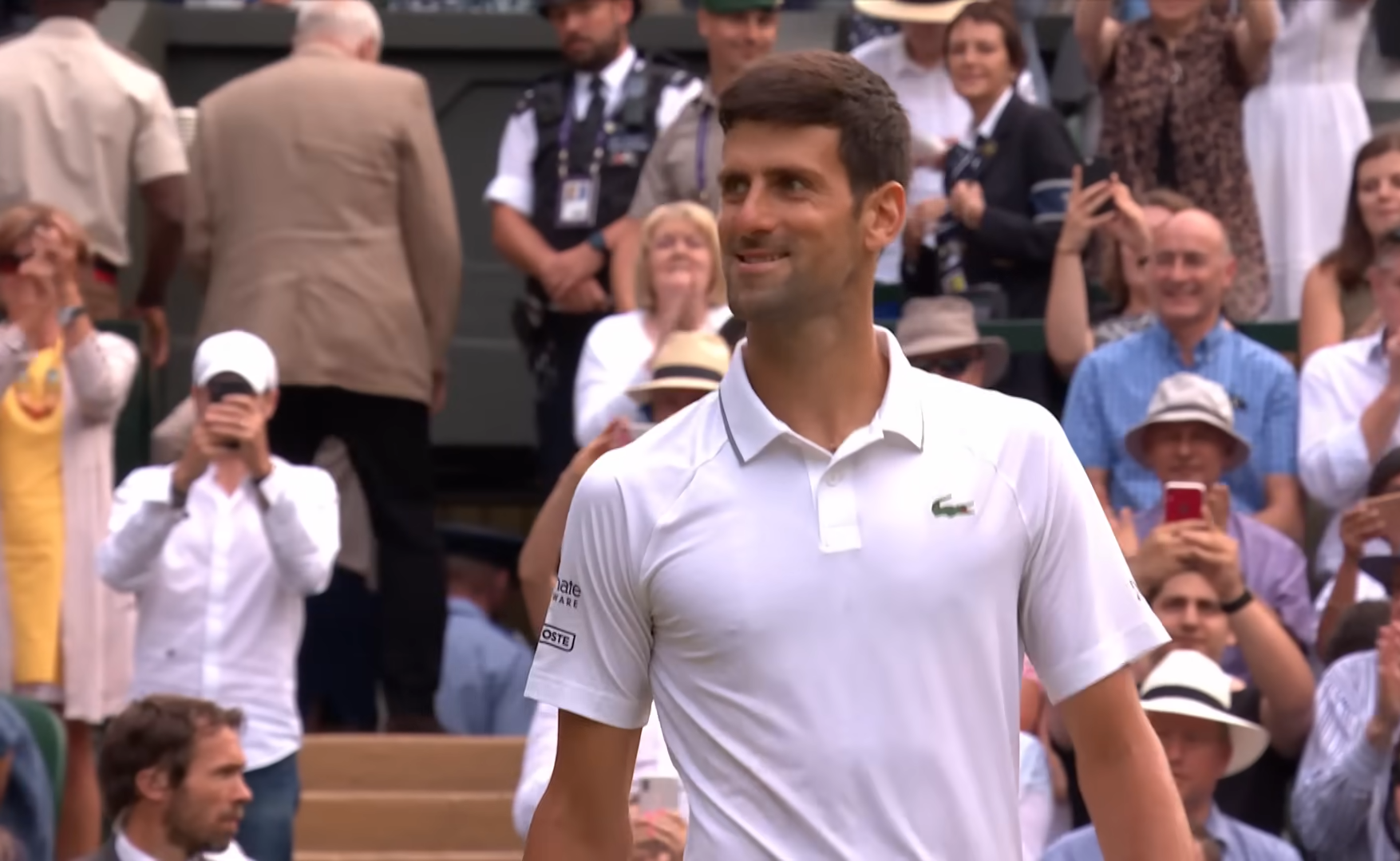
At the top of the list stands Novak Djokovic, whose statistical dominance has redefined tennis greatness. Holding records for most weeks at world No. 1 (428), most Grand Slam titles (24), and most Masters titles, Djokovic has achieved a level of sustained excellence unmatched in the sport’s history.
Djokovic is the only player to complete a triple Career Grand Slam and a double Career Golden Masters, highlighting his dominance across all surfaces and tournaments. His peak years, particularly 2011 and 2015, are considered among the greatest seasons ever. Combined with his longevity and ability to consistently outperform rivals, Djokovic’s case as the greatest of all time is built on both numbers and resilience.
- Display 9 Products per page