
From the Grandstand to the Saddle: Women in Horse Racing
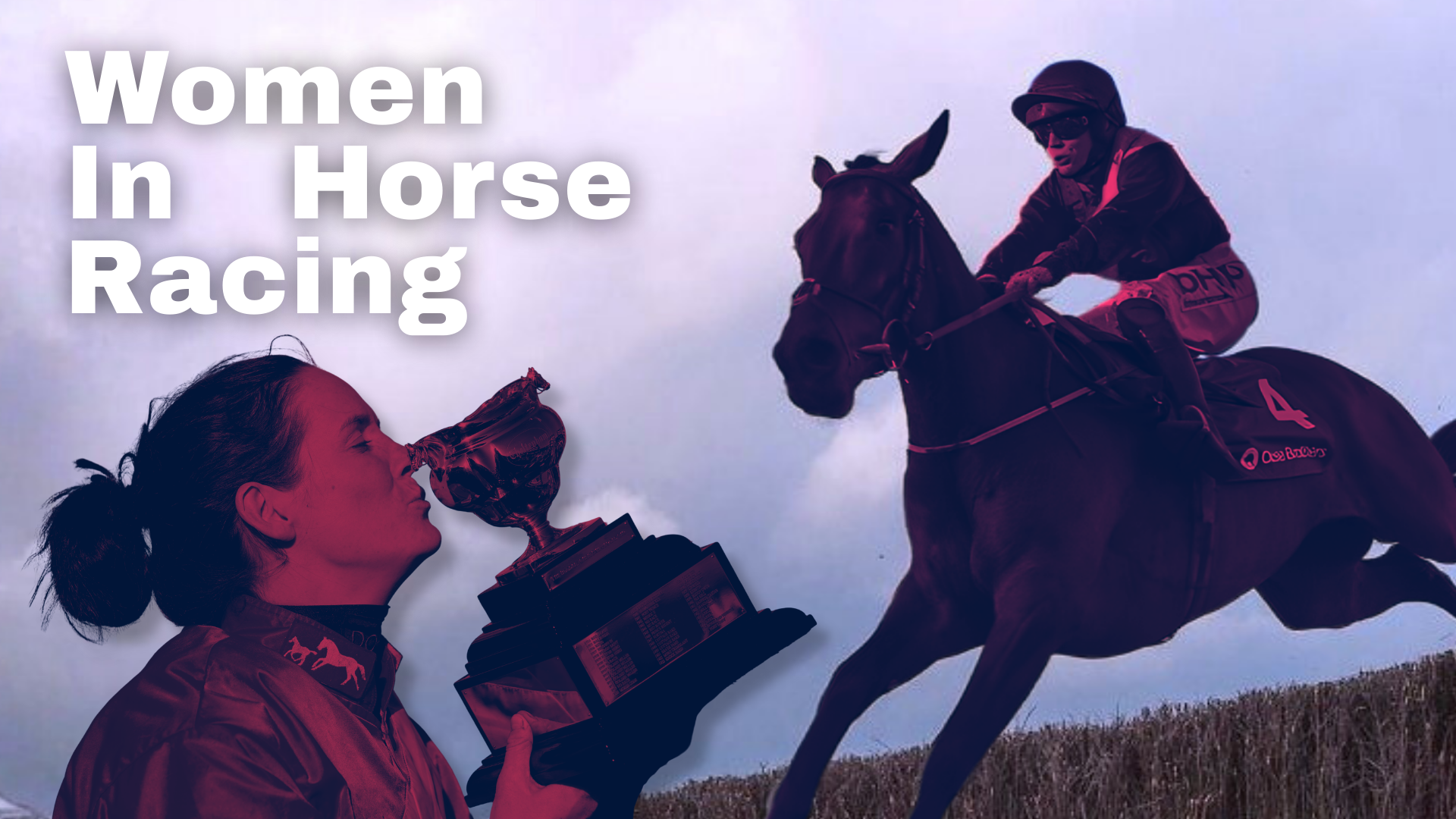
We love horse racing for many reasons, but one stands out: it’s one of the few sports where men and women line up and compete as equals. As the sport gears up for one of its biggest moments of the year at the Cheltenham Festival, we are celebrating just how far women in racing have come – because the journey has been anything but easy.
Women in Racing: A Timeline
For most of horse racing’s history, women were largely invisible in it – kept to certain enclosures as spectators, denied official recognition as owners, and simply not allowed to ride as jockeys. That began to change, slowly but surely:
1966 – The Jockey Club grants women the right to hold a trainer’s licence, but only after Florence Nagle, then in her seventies, won a 20-year legal battle to make it happen. Women had been training horses for decades by then, just never officially.
1972 – Meriel Tufnell becomes the first woman to win a flat race under Jockey Club rules, though women were still racing separately from men.
1974 – Female and male jockeys finally compete together on equal terms.
1975 – The Sex Discrimination Act changes the legal landscape for good.
1977 – Charlotte Brew becomes the first woman to ride in the Grand National.
The Women Who Changed Everything
Jenny Pitman: The First Woman to Train a National Winner
Before the jockeys rewrote history, a trainer from Leicestershire had already done it. Jenny Pitman became the first woman to train a Grand National winner when Corbiere took the race at Aintree in 1983, and she repeated the feat twelve years later with Royal Athlete in 1995. She also became the first woman to train a Cheltenham Gold Cup winner, with Burrough Hill Lad in 1984, and followed it up with a second Gold Cup triumph via Garrison Savannah in 1991. Jenny Pitman paved the way for other female Grand National-winning trainers that followed, including Venetia Williams and Sue Smith.
The Women Jockeys Riding Winners
Fast forward to 2021, and everything changed when Rachael Blackmore steered Minella Times to victory at Aintree, becoming the first female jockey to win the Grand National in the race’s 186-year history. Weeks earlier, she had been crowned leading jockey at the Cheltenham Festival (the first woman ever to claim that title), riding six winners, including the Champion Hurdle. The following year, she won the Cheltenham Gold Cup, completing a set of Festival feature races nobody had managed before. She retired in May 2025 with 575 professional wins, and this year she’s back at Cheltenham, not in the saddle, but as the official Head of Ladies Day for the 2026 Festival.
On the flat, Hollie Doyle has been equally relentless. In May 2025, she became the most successful female jockey in British racing history, surpassing Hayley Turner‘s record with her 1,023rd win at Ascot. She was also the first female jockey to win a Group 1 at Royal Ascot, shattering one of the last glass ceilings in British flat racing. Bryony Frost, meanwhile, became the first woman to win a Grade 1 race during Cheltenham Festival week back in 2019.
The Shergar Cup
Finally, there’s the Shergar Cup at Ascot – the annual team jockeys’ competition that has become something of a showcase for just how far women in racing have come. Since a dedicated Ladies team was first introduced in 2012, the girls have won the competition five times, consistently beating their male counterparts from Great Britain & Ireland, Europe, and the Rest of the World. Hayley Turner has been the driving force, becoming the most successful rider in the event’s history with 11 winners across her appearances and three Alistair Haggis Silver Saddle awards for leading jockey.
In 2025, Ascot retired the Ladies team entirely, but not as a step back. Female riders are now integrated across all four teams, competing not as a separate category, but as equals.
Why Ladies’ Days Exist and Why They Still Matter
Ladies’ Days were never just about fashion. They started as a way of welcoming women into a sport that had spent decades keeping them at arm’s length, giving them a dedicated day, a reason to come, and a community to belong to. Today, they’re also a celebration of how far the sport has come.
The biggest and best in the UK calendar include Ladies Day at the Cheltenham Festival in March, the Grand National at Aintree in April, Royal Ascot Ladies Day in June, Epsom Derby Friday, Goodwood, York, and Chester – all iconic days out that go well beyond the racing itself.
Cheltenham Festival 2026: The Perfect Backdrop for Women’s Day
The timing couldn’t be better. Just three days after International Women’s Day on 8th March, the Cheltenham Festival opens its doors, running from 10th to 13th March. Ladies Day falls on Wednesday, 11th March, led by Rachael Blackmore herself in her new role. It’s the greatest jump racing meeting in the world, and this year it carries extra meaning. Be a part of it this year and raise a glass to the women who made it happen.
Horse Racing Hospitality – 2026
- Display 12 Products per page
Cheltenham Festival
One of our Cheltenham Festival Team are ready to help you plan your day at Cheltenham Festival 2027 - Complete this contact form and one of our Cheltenham Specialists will be in contact shortly.



